Our Aim
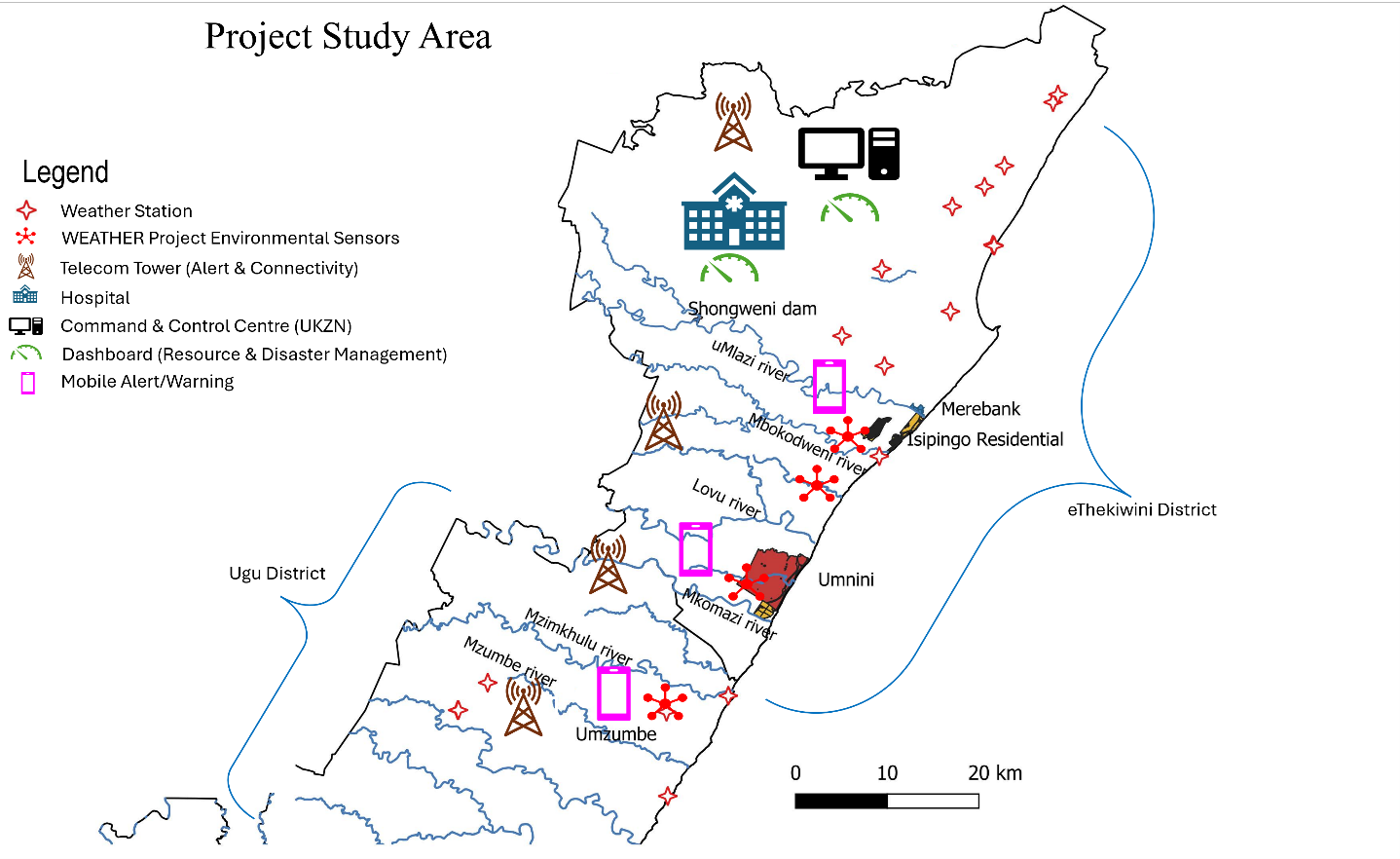
The WEATHER project addresses this critical challenge by bridging the gap between climate forecasting and practical public health action. Our goal is to co-develop, pilot, and evaluate an integrated Early Warning System (EWS) that issues timely, localised warnings to communities, healthcare facilities, and government disaster management units before floods and climate-linked disease outbreaks occur. By pairing cutting-edge AI technology with public community action, we aim to build a resilient, equitable health system and communities capable of protecting lives during extreme weather.
How We Work
At the core of WEATHER is a commitment to participatory co-creation. Technology is only effective when designed alongside the people who rely on it. Our process follows five key pillars:
- Evidence-Driven Design: Synthesising global literature, regional water quality testing, and epidemiological data to ground our models in hard evidence.
- Community Co-Creation: Listening to residents’ lived experiences during past disasters to shape warning messages that are easy to understand and act upon.
- Health System Strengthening: Assessing clinic infrastructure while assessing knowledge gaps and delivering training for health workers.
- Data Integration & AI: Feeding real-time environmental sensor data and historical health records into machine learning models to generate actionable forecasts.
- Policy Alignment: Translating technical findings into clear policy recommendations to guideĀ resource allocation and long-term disaster planning.
Our Objectives
- Synthesise Climate-Health Evidence: Conduct a systematic scoping review to map weather-disease pathways, establishing localised risk tiers and trigger thresholds for public health action.
- Develop & Validate AI Models: Build and deploy predictive algorithms capable of issuing 1to 14-day forecasts for flooding and climate-sensitive disease outbreaks.
- Integrate Multi-Channel Alerts: Deliver real-time warnings via user-friendly dashboards, SMS networks, and WhatsApp channels in both English and isiZulu.
- Strengthen Health Facilities: Assess critical primary health centres and district hospitals using adapted WHO audit tools, establishing standard operating procedures (SOPs) and disaster continuity plans.
- Train Frontline Healthcare Staff: Deliver accredited training modules and simulated emergency drills to prepare medical personnel for climate-induced surge capacity.
- Measure Social Return on Investment (SROI): Quantify the social and economic value generated for every R1 invested in early warning infrastructure.
Partners & Funders
The WEATHER project is funded by the National Institute for Health and Care Research (NIHR) and executed by a global, multidisciplinary partnership:
Academic Partners
Government & Community Partners